



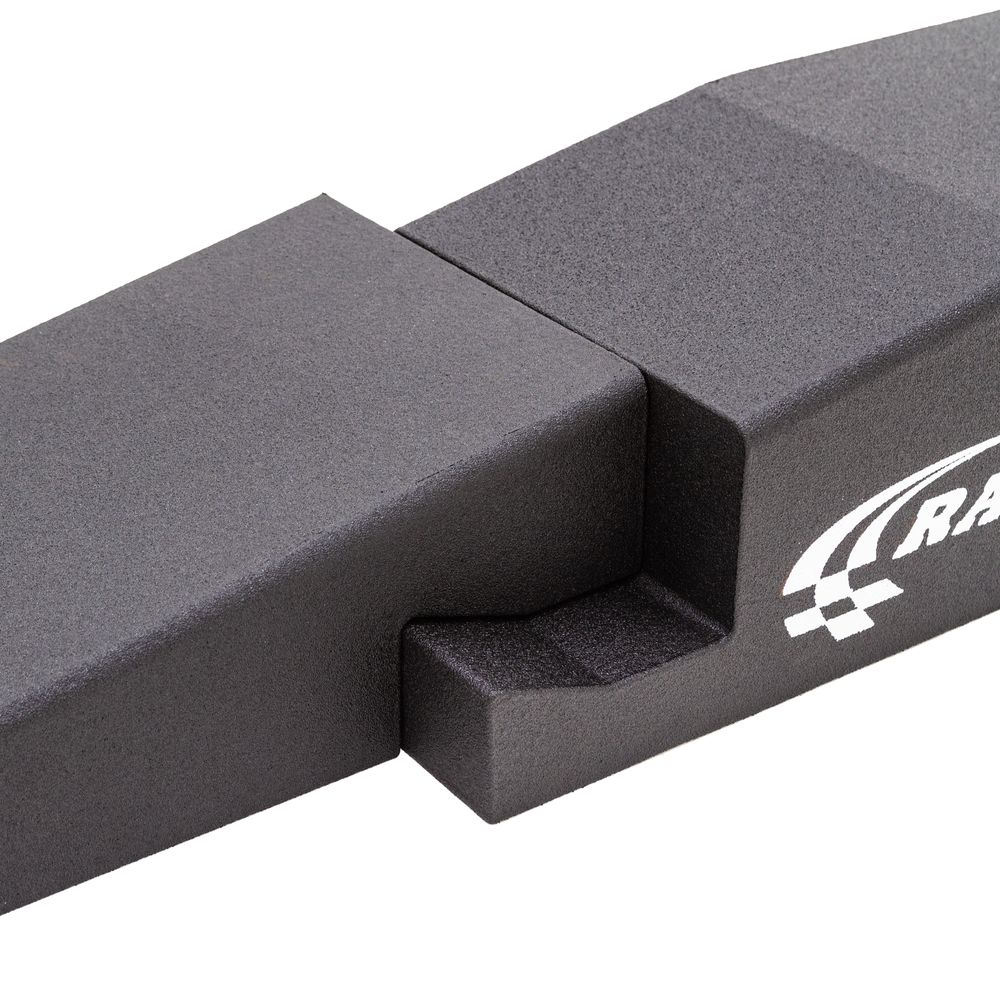

Race Ramps™ 56" Two-Piece Low-Profile Car Service Ramps - 6,000 lb. GVW Capacity per Pair
$419.03
Pricing shown as of 4/7/2026. Please note that prices are subject to change without notice.
Key Features:
- Lifts a car up 8" for service or repair; 10.8° approach angle
- Ramps measure 56" L x 12" W x 10" H and support 6,000 lb. GVW
- Accommodates tires up to 10" W
Similar Products


Overview
Overview
Specifications
Made in the USA
Description:
2-piece ramp
Maximum Capacity:
1,500 lbs.
Weight:
10 lbs.
Length:
56"
Width:
12"
Height:
10"
Lift Height:
8"
Maximum Tire Width:
10"
Approach Angle Degree:
10.8°
Material:
Foam
Color:
Black
Sold As:
Pair
Brand:
More Information
If you drive a low profile sports car like a Corvette, these Race Ramps™ give you access to the underbody to change the oil, check the transmission or simply inspect the underbody of your valuable car. Their gradual incline meets the clearance needs of vehicles like the Corvette C5 and C6, Dodge Viper, Porsche, Ferrari and Mustang without the need for extensions like other car ramps. The low profile car ramps from Race Ramps™ are also great for storing or displaying your vehicle and come in two sizes and one or two piece designs.
These tough ramps are sold in pairs and can support up to 1,500 pounds each for a total vehicle weight capacity of 6,000 pounds. The one-piece design is a better choice for simple service and maintenance, while the two-piece design gives you the option to remove the ramp once your car is stabilized on the top portion for better side access or for display in showrooms or at shows. The raised lip at the top of the ramp provides a gentle stop that reduces the need for a spotter, although we always recommend having one present. Their 12-inch width is designed to comfortably accommodate tires up to 10 inches wide. Positioning them or moving them for storage is easy, since each ramp only weighs 10 pounds and comes with a carrying strap.
These ramps are constructed of 100% solid, high-density foam with a rugged anti-slip coating that results in a lightweight ramp solution that is strong, yet durable. They won't slide, scratch, or damage your floors, and won't conduct heat or cold from the surface to your tires, making them a versatile solution in hot or cold weather applications.
- Lifts a car up 8" for service or repair; 10.8° approach angle
- Ramps measure 56" L x 12" W x 10" H and support 6,000 lb. GVW
- Accommodates tires up to 10" W
- Two-piece design allows for greater access to the bottom of a vehicle when in use
- Slip-resistant material will not scratch or mar floor
- Sold in pairs
- Manufactured in the USA from 100% solid lightweight high-density foam with traction coating
Usage Guidelines
Before using the ramps ensure other persons are clear of the vehicle and the ramps. Ensure that the ramps are free from damage or corrosion before use. Use only a single pair of wheel ramps at the front or rear, do not use two ramps on one side of the vehicle. Position the ramps in line with the wheels, with the steering wheel pointed straight and the incline against the tire tread. Carefully drive the vehicle onto the automotive ramps until it is in the correct position. Turn the engine off, apply the parking brake, get out of the vehicle and securely chock the remaining wheels on the ground. Before starting work, walk around the vehicle ensuring it is securely positioned. Always use a jack stand if a person will be going under the vehicle. On completion of the work, check the parking brake is still firmly on and remove the chocks. It is important to drive very slowly when coming off the ramps to prevent the automotive bodywork from making contact with the car ramp. Exercise caution when using these car ramps with a trailer or three wheeled vehicles.

Reviews
Reviews
Q&A
Q&A