
Where to Start:How to Choose the Right Scooter or Electric Wheelchair for Your Mobility Needs
Updated on: September 4th, 2025

Whether it's an immediate need or something that's gradually become a necessary investment, mobility scooters and power wheelchair allow those with temporary or permanent limited mobility the ability to experience a better quality of life. By providing a method of transport that allows the user to navigate daily obstacles or visit areas that would otherwise be impassable, scooters give back a sense of personal freedom that can sometimes free like a frustrating struggle.
Knowing where to start can be daunting, and our hope is that this guide will help you make an informed decision about what mobility device will best suit your needs, or the needs of your loved one.

Where will you be using your powered wheelchair or scooter?
Are you looking for an electric wheelchair to use around your house? Do you need a mobility scooter to take on a trip to a grocery store or mall? Will you be transporting your device in a vehicle to the place where you will be using it? Answering these questions ahead of time will create a sketch of the features that are important in your choice of mobility device.
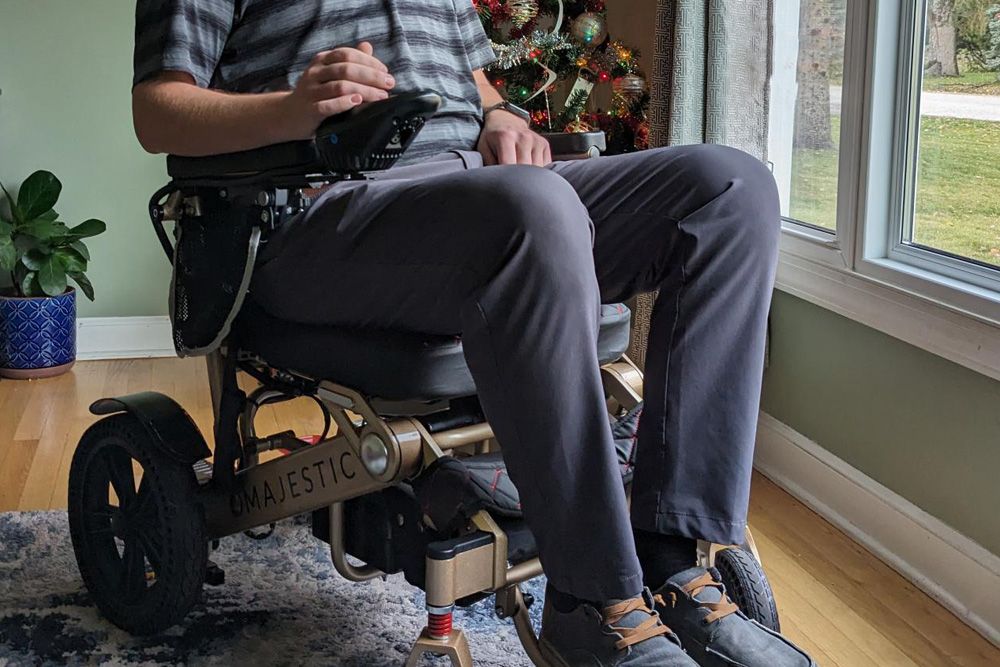
Mobility devices for short trips, indoor use
Some of the features that these scooters should have:
- Compact footprint and a tight turn radius for navigating hallways, bedrooms, bathrooms in the home as well as shopping aisles.
- Small to medium mileage/battery life that allows you to use it throughout the day, on a trip to the shops, etc.
Mobility devices for long trips, outdoor use
Some of the features that these scooters should have:
- Tires that will hold up on an outdoor excursion with different types of terrain, including gravel and grass.
- Long mileage and battery life, so you that can travel for miles without worrying about getting stuck on a hike or in an unfamiliar neighborhood.
If your scooter needs to be transported by vehicle, some of the factors to consider:
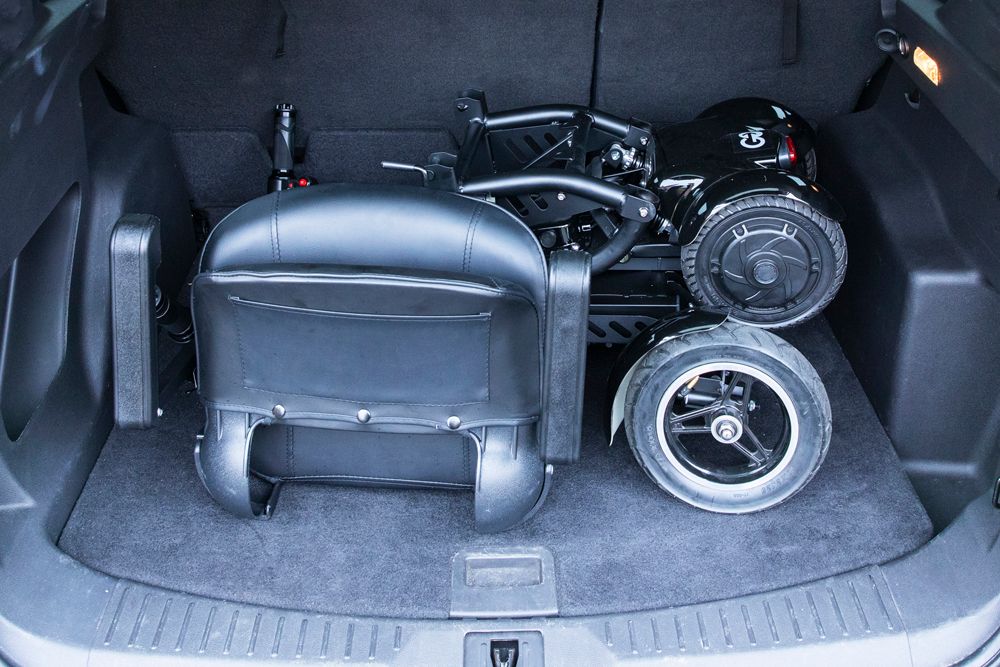
How to transport a scooter by trunk: Some scooters are able to break down into multiple pieces to make it easier to load into the back of a car or trunk. While convenient in that it will fit in your vehicle, you will need someone available to disassemble and lift the pieces into the vehicle. This is a good choice if you have a strong caregiver or companion, however probably not a good choice if you are traveling alone, or with a caregiver or companion who also has mobility limitations.
How to transport a scooter by carrier: For larger scooters, mobility carriers with ramps allow them to be loading up onto the carrier without lifting any piece of the scooter. Once the scooter is secured on the carrier, the most the user will have to do is lift up and lock the ramp vertically.

Additional factors to consider
Location and Terrain
If you want to use your scooter indoors, a compact scooter or three-wheel scooter with a tighter turn radius will allow you to get around corners and weave through furniture. If you are looking for a scooter for outdoor excursions, such as sidewalks, parks and similar spaces, then a midsize or full-size scooter with longer driving range and higher speed will be a better choice. In either case, your scooter should be equipped with anti-tip casters on the back to tackle light inclines.
Hardwood floors are significantly easier to traverse than dirt paths, so knowing the types of terrain on which you want to travel is important. Much like cars and motorcycles, some mobility scooters have more power and oomph than others. For a true off-road experience, a heavy duty off-road scooter will be just the ticket, as they come with added safety features, cushioning, and off-road tires.
Mileage and Battery Life
Most batteries will last several years with daily use, and the daily charge travel distance varies – some power scooters can go for 45 miles before they need to be recharged! If your daily mileage will only be a few miles, consider purchasing a mobility scooter with a cost-saving smaller battery. However, if you know there will be times when you want to travel many miles without recharging, a scooter with a larger capacity battery will be a better fit for your lifestyle.

Portability
For travel and transportation, there are multiple mobility scooters that are designed with lightweight components and intuitive disassembly. Some of the more compact models are foldable so that you can fit them in the back of a van of SUV. If you know that you want a larger mobility scooter, you will be able to transport it on a hitch-mounted carrier. Hitch-mounted carriers can be powered or come with ramps. If you go that route, please make sure that the carrier is rated for the total weight of your scooter. Another method is to tow your scooter on a separate trailer, which can present a hassle when parking and isn’t recommended for daily living scenarios.

Arm and Hand Mobility Limitations
For some users with limited arm and hand dexterity, turning the handlebars of a power scooter presents too large of a challenge. Fortunately, power wheelchairs offer armrest-mount joystick controls that are designed for individuals with a limited range of motion. They also offer a tight turn radius, and have a small footprint so they can fit into areas that stump scooters.

Weight Capacity
If you plan on carrying heavy objects along with you on your scooter, such as groceries, or if you are a person of size, then you must take the weight capacity of the scooter into account because not all scooters are made equal. Most lightweight and standard-sized mobility scooters can support users between 250 to 350 pounds, so look for ones with higher weight ratings if applicable.

Seat Options
From a compact seat to a full, extra-wide captain’s chair or stadium seat, your preferred seat option should be based on your body shape and personal comfort level. If you know you want a smaller model for quick trips, a smaller seat makes sense; however, if you are a larger individual and prefer a roomier seat, then maybe a midsize or full-size scooter would be a better choice.
Will Medicare pay for a mobility scooter?
h2>Because mobility scooters are a necessary investment for certain individuals living with limited mobility, Medicare does cover the cost of power-operated scooters and wheelchairs (which they consider to be Durable Medical Equipment (DME) if certain conditions are met, such as:
p>- Your doctor submits a written order that your medical condition necessitates a mobility device for your home.
- You experience limited mobility that reduces your ability to move within your home, your ability to perform daily living activities, and you can safely operate and get in and off a scooter.
- Your doctor and DME supplier accept Medicare, and have visited your home to verified that the equipment is suitable and will fit through your doorways/around obstacles in the home.
For a complete list of requirements, read the Medicare Fact Sheet of Wheelchair and Scooter Coverage, which includes a list of power wheelchairs that require prior authorization from your DME as well as more detailed information about the process.

Accessories
Once you’ve decided on a scooter, consider what accessories will make help the transition go smoothly. Threshold ramps will help you ride your scooter through doorways or small steps in your home. To transport your scooter, there are a variety of carrier options available. The most popular choice are hitch-mounted carriers; however, if you are physically limited, powered scooter carriers can do the work for you. During storage or transport, covers will keep your scooter clean of dust, debris and the elements.