
How to Create a Safe Sakteboarding Space
Posted on: April 21st, 2025

Skateboarding isn't just a sport. It's a language. A lifestyle. A place where movement meets expression and rubber wheels meet pavement. But here's the thing—if you want to unlock the full potential of a skate session, you've got to start with one simple rule: safety comes first. Not in a boring, lecture-y kind of way. In a smart, stay-on-your-board, keep-pushing-longer kind of way.
Whether you're building a DIY setup in your driveway or leveling up a public space, these are the basics—and the bold moves—you need to know to create skate spaces that are built to last and made to shred.
Start With the Right Surface (Because Bumpy Rides Ruin Everything)
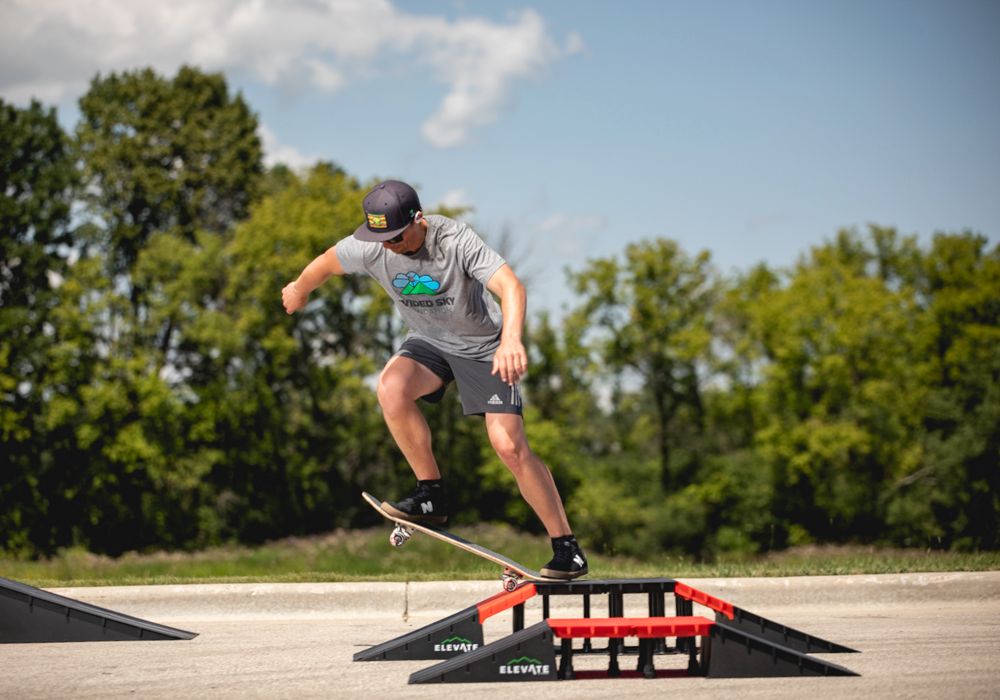
A kicker is not a halfpipe. And a box jump isn't a grind rail. Every ramp has its purpose—and choosing the right skateboarding ramp makes the difference between progression and frustration. Here's what works best depending on your setup:
- Driveway or garage? Go for portable launch ramps, mini quarter pipes, or grind boxes. Lightweight. Easy to move. Great for learning.
- Larger outdoor pad or community park? Mix in multi-sport ramps or double launch ramp sets for versatility
- Skaters just getting started? Stick with lower-angle ramps and smaller features for a smoother learning curve.
Discount Ramps offers a variety of options to suit these needs, like the Elevate Outdoor Mini EZ-Link Skateboard Ramp Set, perfect for beginners and compact spaces, and the FreshPark Professional BMX and Skateboarding Grind Rail, which provides adjustable height for various skill levels.
Secure It Down or Risk a Flying Ramp (Not Ideal)
Nothing kills a session faster than a moving obstacle. If your ramp shifts the second someone drops in, you've got a hazard, not a hotspot. That's why anchoring your gear is non-negotiable. There are many ways to properly secure a skateboard ramp; here's how to do it right:
- Use anti-slip rubber grip mats beneath ramps or boxes to reduce sliding.
- Secure ramps with sandbags or weighted anchors if you're working with portable gear.
- Bolt modular ramps to wood platforms or concrete pads if you're going semi-permanent.
- Double-check the hardware—especially on foldable ramps or multi-piece builds.
And don't forget: weather can change grip. Wet surfaces? Skip the session or dry it off. Ice? Just don't.
Make Visibility a Priority
Look, not every skater is pulling off tricks. Some are just cruising. Others are filming. And a few? They're just standing there—daydreaming about their next trick.
So, if you're setting up a skate space near traffic, pedestrians, or even just your neighbor's driveway, make it obvious that this is a skate zone:
- Use safety cones or bright edge markers to define the skate area.
- Add reflective tape to ramp edges, especially for evening sessions.
- Consider LED puck lights or motion lights if skating happens at dusk or night.
Clear boundaries help everyone stay safe—and they send a simple message: this space is designed, not improvised.
Don't Forget Protective Gear
Yes, you need protective pads. And you'll need helmets, too. Remember, the safest skate spaces are the ones where people wear protection without feeling weird about it. Whether you're 8 or 48, gear matters:
- Helmets should be dual-certified and fit snugly without rocking.
- Knee and elbow pads can save skin and your session.
- Wrist guards? Absolutely, especially for beginners or street skaters.
As a space builder, set the tone. Make safety gear expected. Make it normal. If it's your driveway, post a reminder. If it's a shared park, add signage. Skating comes with risk, but smart skaters know how to manage it.
Keep the Space Clean, Clear, and Skate-Ready
A stray rock. A broken bottle. A soggy leaf pile in the wrong spot. Small stuff turns into big problems when you're on four wheels. Make it a ritual—before every session:
- Sweep the surface.
- Check for damage or sharp edges on your ramps.
- Tighten any loose screws or bolts.
- Move clutter far away from the action.
And if it rained last night? Give the surface a little time to dry. Better to wait than to wipe out on a slick turn.
Build a Real Community, Not Just a Setup
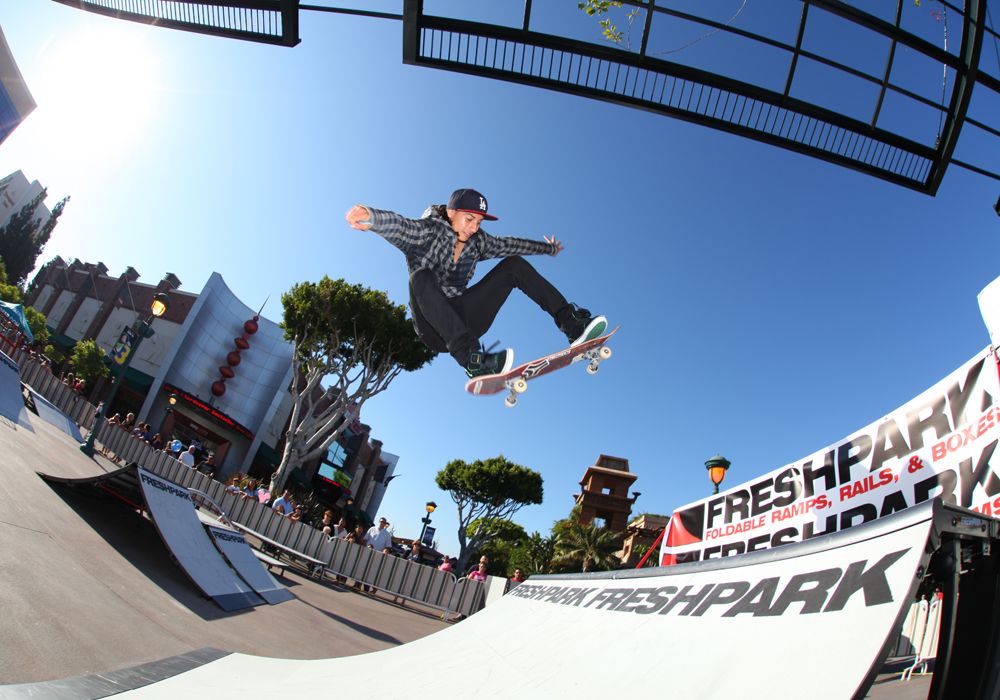
This might be the most important point of all. Skateboarding thrives when it's shared. The safest skate spaces aren't just made of ramps and rails—they're made of respect, collaboration, and encouragement.
- If you're a parent, join your kid for a session.
- If you're a skater, invite the new kid to drop in.
- If you're a homeowner, talk to neighbors (and the HOA) before you start building.
- If you're a city official or park planner, involve local skaters in the process.
Make Safety the Starting Point for a Lifetime of Skating
Creating a safe space for skateboarders doesn't mean stripping out the fun. It means building the kind of spot where skaters can go all-in, fall and get back up, and keep progressing without fear. And that's exactly what good gear is for.
At Discount Ramps, we've spent years bringing you equipment that's portable, durable, rider-friendly, and—most importantly—safe. Whether you're creating a mini training park in your backyard or outfitting a rec center, our skateboard equipment is made to perform and easy to set up right. Reach out to us to get the right gear to make a safe space for skateboarding that lasts.