
Trailering Your Vehicle 101
Updated on: June 17th, 2025
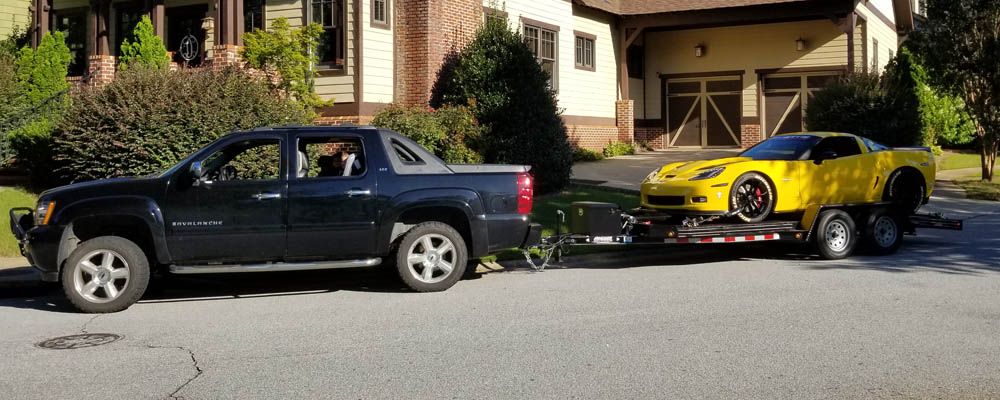
While trailering your vehicle might seem like a simple task, there's a lot more to it than meets the eye. Whether you're hauling your prized classic car to a show, moving across the country, or simply transporting your off-road vehicle to the trails, proper trailering ensures your vehicle arrives safely and without damage. Here's your comprehensive guide to mastering the art of vehicle trailering.
Choosing the Right Trailer
Properly trailering a vehicle starts with choosing the right trailer for your vehicle. Before you start, read Towing: What You Need to Know, and consider the following factors:
- Size and Weight Capacity. Ensure the trailer's dimensions and weight capacity can comfortably accommodate your vehicle. It's critical to distribute the weight evenly to maintain balance and stability during transport.
- Trailer Type. Choose between open and enclosed trailers. Open trailers are cost-effective and ideal for short distances, while enclosed trailers provide superior protection from the elements, making them perfect for long hauls.
- Hitch Compatibility. Verify that your tow vehicle's hitch matches the trailer's coupler type and weight rating.
Open vs. Enclosed Trailers: The Difference in Securing Your Vehicle
The method of securing your vehicle to the trailer can vary depending on whether you're using an open or enclosed trailer.
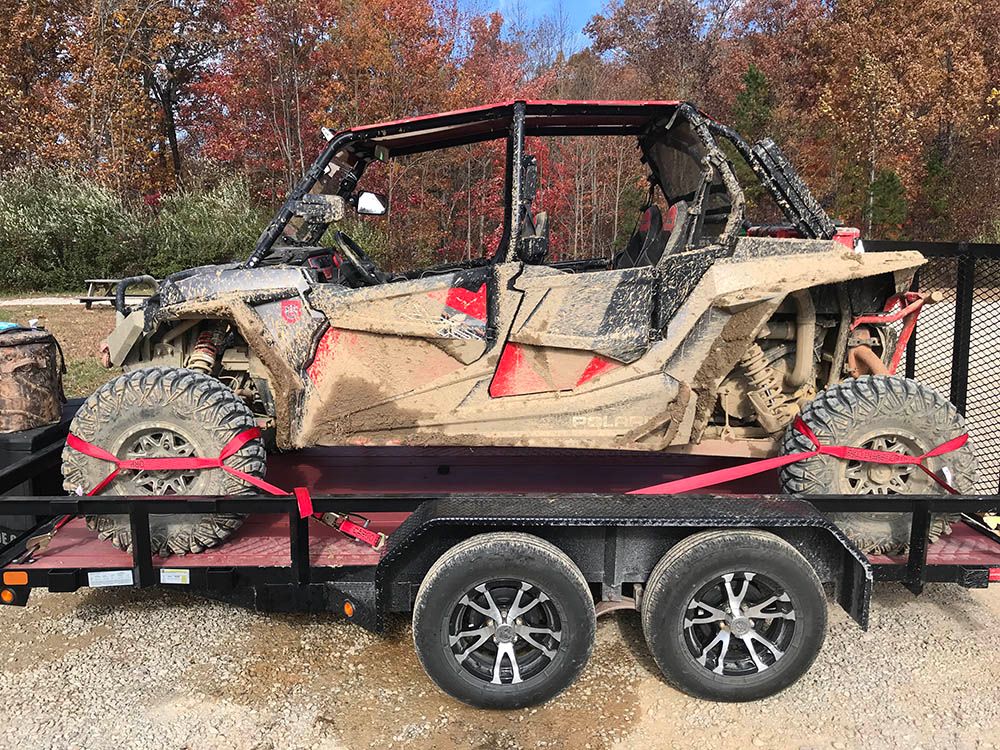
Open Trailers
The biggest benefit to open trailers is that you have easy access to all four sides of your vehicle, making it easier to access any and all tie-down points. They're also a lot more forgiving with a big of overhang, or unusually-sized vehicles such as vintage cars or trucks.
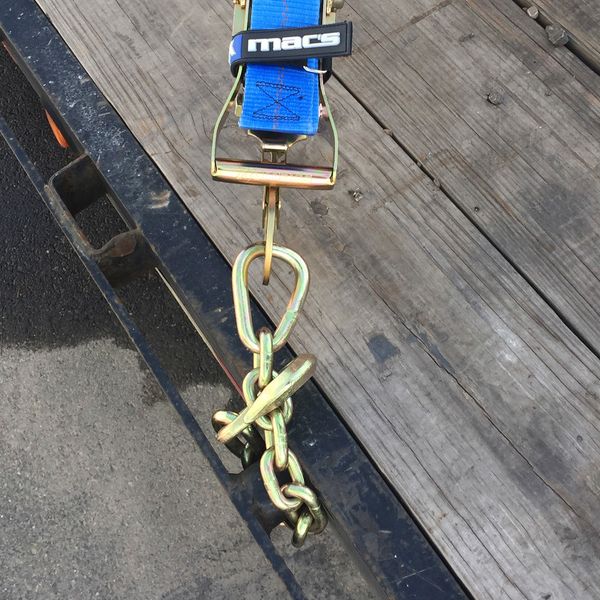

- Tie-Down Points. Open trailers usually have designated tie-down points on the frame or floor. Attach ratchet straps or chains to these points and connect them to the vehicle's frame, suspension, or wheels.
- Wheel Straps. Use wheel straps to secure the wheels to the trailer and prevent them from moving.
- Extra Precautions. Consider using axle straps for extra security, especially for long distances.
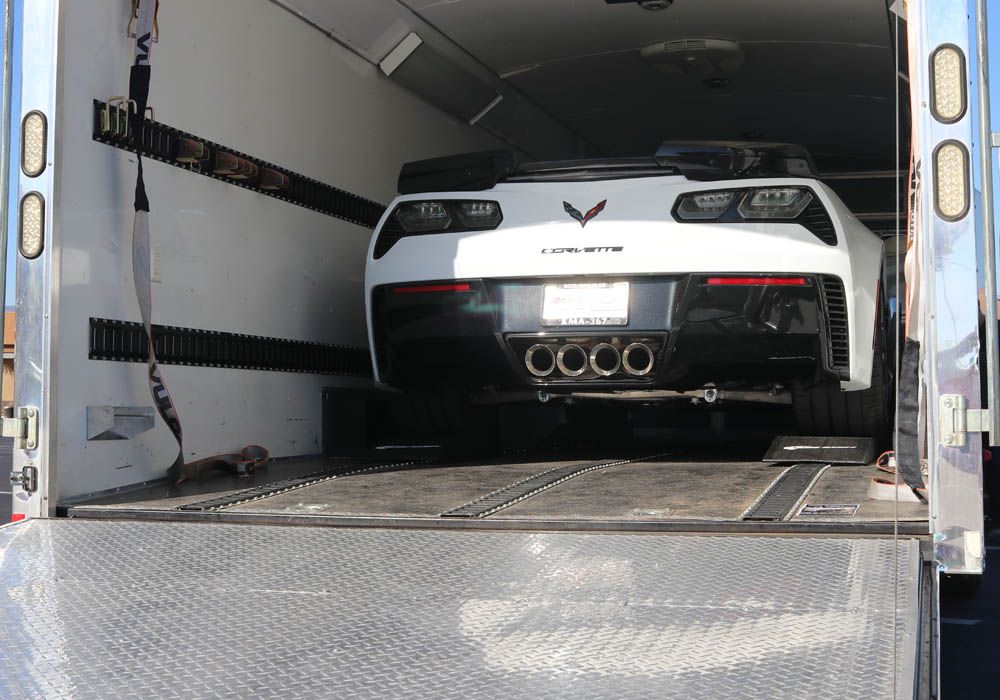
Enclosed Trailers
Enclosed trailers are ideal for smaller vehicles as well as expensive vehicles such as sports cars. They offer complete protection from the elements during transit, discretion if you don't want others to estimate the value of what you're transporting, and trailer walls can easily be equipped with E-track or L-track to accommodate multiple tie-down anchor points. The downside is that space will be tight, making it cramped and difficult in some cases to access tie-down points on the vehicle and trailer. The size limitations are also a lot more stringent than those of an open trailer.
- Floor Anchors. Enclosed trailers often have floor anchors or D-rings for attaching tie-downs. Secure ratchet straps or chains to these anchors and connect them to the vehicle's frame or suspension.
- Soft Straps. Use soft straps or protective sleeves to prevent the tie-downs from damaging the vehicle's paint or finish.
- Interior Clearance. Ensure ample clearance between the vehicle and the trailer's walls and ceiling to prevent damage during transport.

How to Load and Secure Your Vehicle for Transport
Once you've settled on a trailer, the next step is determining what you need to properly load your vehicle up and get on the road.
Trailer Ramps Keep Bumpers Scratch-Free
If you're trailering a car, there's no doubt that it's important to you, whether personally or as part of your business. As such, there's no way you want to hit that bumper on the way up. Calculating your angle of approach ahead of time can clue you in to whether the loading angle will be a problem, and trailer ramps are the solution. Race Ramps Trailer Ramps are used by professional haulers to make sure vehicles clear every time, and are lightweight enough to easily move in and out of position without hassle.
Straps Designed for Trailered Vehicles
Trailer Safety: Wheel Chocks and Safety Chains
Ensure that the trailer stays securely in place while you load and unload your vehicle with wheel chocks. The last thing you want is to feel your trailer shift or roll with your car or UTV half-loaded. If your trailer is already hitched to your vehicle, cross and connect the trailer safety chains if they are not already hooked up. Since they are the backup if the hitch fails, it's best practice to keep them engaged any time your trailer is hitched to your vehicle.
Extra Tips for Safe Trailering
Ensuring a safe and smooth trailering experience goes beyond just securing your vehicle. Here are some additional tips to keep in mind for a successful journey:
- Check Tire Pressure. Make sure that both the trailer and vehicle tires are properly inflated. Underinflated tires can lead to increased heat buildup, which can cause blowouts. For optimal performance, consult your vehicle and trailer manuals for the recommended tire pressure.
- Lights and Signals. Test all lights and signals on both the tow vehicle and trailer before hitting the road. Faulty lights can pose a safety hazard for you and other drivers. Make sure your brake lights, turn signals, and running lights are functioning properly.
- Weight Distribution. Distribute the weight evenly on the trailer to prevent swaying and instability. A properly loaded trailer should sit level when hitched to the tow vehicle. An unevenly loaded trailer can be difficult to control and can lead to tire wear and suspension damage. To achieve proper weight distribution, you may need to adjust the position of your vehicle on the trailer or use additional weight-distributing hitches.
- Regular Inspections. During long hauls, stop frequently to check the straps and ensure everything remains secure. Take a break every few hours to check the tire pressure on both the tow vehicle and trailer. Look for any signs of loose straps, damaged tires, or overheating wheel bearings. Also, tighten any loose straps and address any problems before continuing your journey.
Need Help With Safe Trailering? Discount Ramps Has You Covered
Trailering your vehicle can be a hassle-free experience with the right knowledge and preparation. Remember, safety comes first. By choosing the right trailer, securing your vehicle properly, and following essential safety precautions, you can transport your vehicle with confidence.
Discount Ramps offers a wide range of high-quality trailer tie-downs and accessories. We'll help you find the perfect equipment for your specific requirements. Have any vehicle trailering tips of your own? Let us know in the comments!
Disclaimer: This educational article contains general information only; Discount Ramps cannot confirm the compatibility of any vehicle, trailer, or cargo as there are innumerable factors that make up compatibility. Discount Ramps cannot be held liable for damage, injuries, or accidents that occur after reading this article.