
How to Choose between Full-Width Portable Wheelchair Ramps & Track Ramps
Updated on: September 8th, 2026

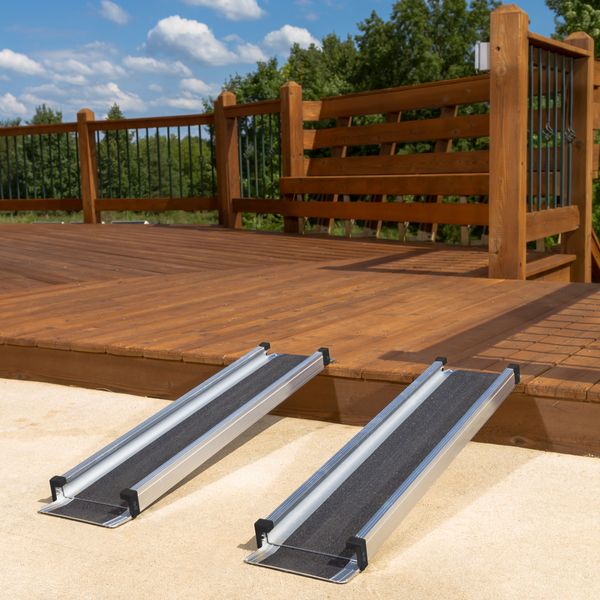
Choosing the right portable wheelchair ramp involves more than finding a ramp that is long enough to clear a step. The type of ramp you choose can affect how easy it is to transport, set up, store, and navigate with your wheelchair or mobility device.
Two common types of portable wheelchair ramps are full-width ramps and track ramps. Both are designed to provide access over steps, curbs, thresholds, and other changes in elevation, but their designs make them better suited to different situations.
Full-width ramps provide one continuous surface across the width of the mobility device, while track ramps consist of two separate tracks that support the wheels. Understanding the differences between these two styles can help you choose a ramp that fits your mobility device, available space, transportation needs, and everyday routine.
What Are Full-Width Portable Wheelchair Ramps?
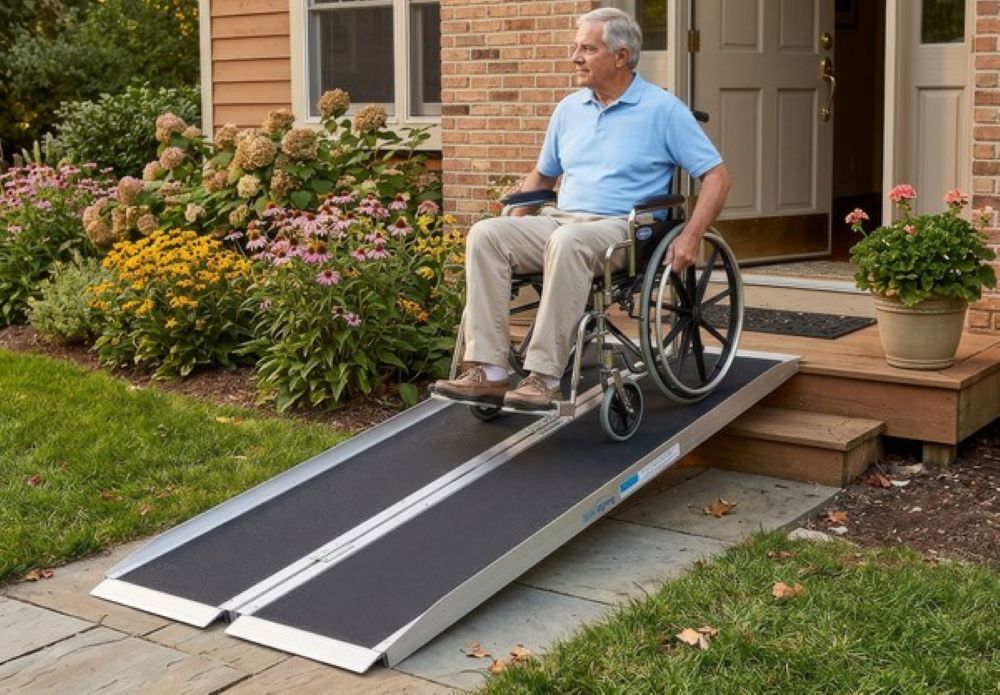
Full-width portable wheelchair ramps provide a continuous surface for a wheelchair, power chair, mobility scooter, walker, or other compatible equipment. Unlike track ramps, there is no need to position individual wheels over separate tracks.
Full-width ramps are one of the most versatile portable ramp options and are available in several designs, including folding, multi-fold, and roll-up models. Many are constructed from lightweight aluminum and can fold or separate into sections for easier transportation and storage.
Full-width portable ramps are typically around 28" to 30" wide, although the usable width varies by model. Wider ramps are also available for bariatric wheelchairs and other larger mobility equipment.
Advantages of Full-Width Ramps
- Continuous surface: The entire mobility device travels across one solid ramp surface rather than two separate tracks.
- Easy wheel alignment: Users do not need to precisely line up each wheel with a separate track before entering the ramp.
- Broad compatibility: Depending on the model, full-width ramps can accommodate manual wheelchairs, power wheelchairs, mobility scooters, walkers, and other wheeled equipment.
- Greater steering flexibility: The wider surface gives the user or caregiver more room for minor steering corrections while traveling over the ramp.
- Multiple configurations: Folding, multi-fold, and roll-up options provide different solutions for transportation and storage.
- Available in longer lengths: Full-width ramps are available in a wide range of lengths for different rise heights.
Applications Where a Full-Width Ramp May Not Be a Good Fit
The primary tradeoff with a full-width ramp is portability. Because the ramp provides a continuous surface, it generally takes up more space and may weigh more than a comparable pair of track ramps.
However, many full-width portable ramps are designed specifically to address this concern. Folding Ramps can collapse into sections, while roll-up ramps can be coiled for compact storage. When comparing models, consider both the ramp's weight and its folded or stored dimensions.
A ramp may technically be considered portable, but if it is too heavy for one person to carry or too large to fit conveniently in your vehicle, it may not be the best option for frequent travel.
What Are Wheelchair Track Ramps?
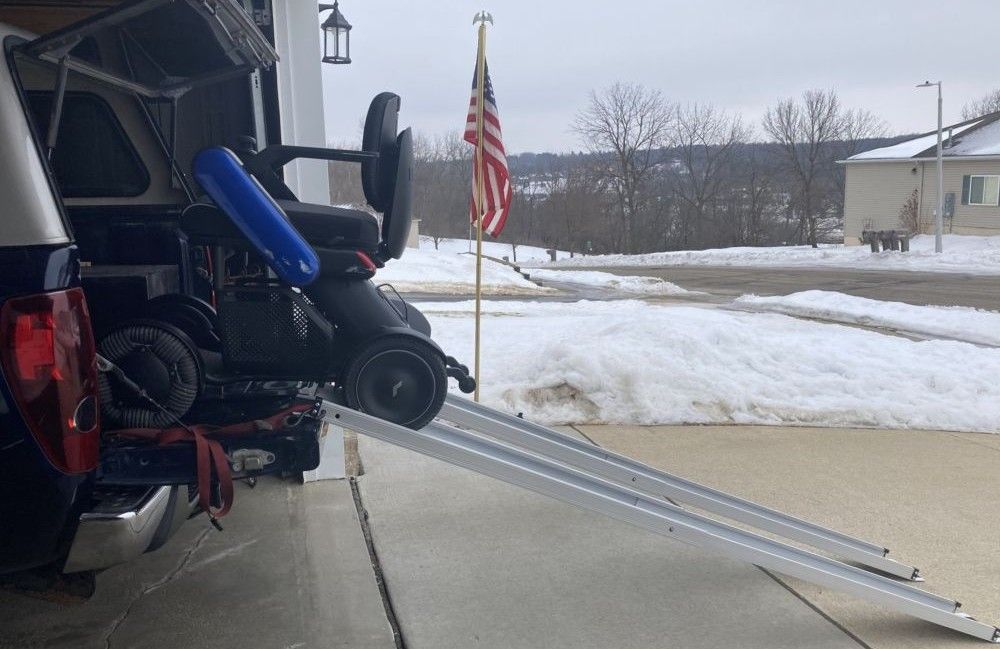
Track ramps consist of two separate ramp sections that are positioned parallel to one another. Each track supports the wheels on one side of a wheelchair, making it compatible with wheelchairs, 4-wheel scooters, and other similar mobility device.
This two-piece design uses less material than a full-width ramp, which can make track ramps significantly lighter and easier to transport. Some track ramps also use a telescoping design, allowing the length of the tracks to be adjusted for different obstacles.
Because track ramps have a narrower surface, it is important to verify compatibility with your specific wheelchair or mobility device before purchasing. Wheel spacing, wheel configuration, track width, weight capacity, and the manufacturer's approved applications can all affect compatibility.
Advantages of Track Ramps
- Lightweight design: Separate tracks are generally easier to carry than a comparable full-width ramp.
- Compact storage: Two narrow tracks can take up less storage space than a full-width ramp.
- Easy transportation: Their smaller footprint makes track ramps convenient for travel.
- Adjustable options: Telescoping track ramps can be extended or shortened to accommodate different rise heights within the manufacturer's specifications.
- Useful in narrow spaces: The two-track design can be helpful where a full-width ramp would be difficult to position.
Applications Where a Track Ramps May Not Be a Good Fit
The main consideration with track ramps is wheel alignment. Because the mobility device's wheels must remain on their respective tracks, the user or caregiver needs to position the device correctly before entering the ramp.
This may be more challenging for individuals who have difficulty steering or maintaining a straight path. Caregivers assisting a mobility device user should also be comfortable positioning the tracks securely and guiding the device over them.
Track ramps are not automatically compatible with every wheelchair, power chair, or scooter. Always check the manufacturer's compatibility requirements before purchasing.
Full-Width Ramps vs. Track Ramps
Both ramp styles can provide portable accessibility, but their different designs make them better suited to different users and situations.
| Feature | Full-Width Ramp | Track Ramp |
|---|---|---|
| Ramp Surface | Continuous surface | Two separate tracks |
| Portability | Good, depending on model | Excellent |
| Storage | Larger footprint | Compact |
| Wheel Alignment | Less critical | Important |
| Steering Flexibility | Greater | More limited |
| Mobility Device Compatibility | Broad, depending on model | Must be verified for the specific device |
| Travel | Good with folding or roll-up models | Excellent |
| Adjustable Length | Available on some models | Common with telescoping models |
How to Choose Between a Full-Width and Track Ramp
There is no single portable ramp style that is best for everyone. The right choice depends on the mobility device, obstacle height, available space, transportation needs, and the person who will be setting up and using the ramp.
Choose a Full-Width Ramp If:
- You want a continuous ramp surface.
- You want more room for steering corrections.
- A caregiver will frequently assist the mobility device user.
- You need a ramp that can accommodate multiple types of wheeled equipment.
- You prefer not to worry about aligning wheels with separate tracks.
- You have enough vehicle and storage space for a larger ramp.
Choose a Track Ramp If:
- Low weight is one of your highest priorities.
- You frequently travel with your ramp.
- Storage space is limited.
- You want a compact ramp that is easy to carry.
- You are comfortable maintaining proper wheel alignment.
- Your wheelchair or other mobility device is compatible with the track configuration.
FAQs About Full-Width Ramps and Track Ramps
Which Ramp Is Easier to Use?
For many users, a full-width ramp provides the simplest experience. The continuous surface means there is more room for minor steering corrections, and the user does not have to precisely position each wheel over a separate track.
This can be particularly helpful when a caregiver is assisting someone with limited steering ability or when the ramp will be used frequently.
Track ramps can also be easy to use once properly positioned, but they require more attention to wheel placement. A user who is comfortable steering a mobility device and maintaining a straight path may find this design convenient, especially when portability is a priority.
Which Ramp Is Better for Travel?
If you plan to carry your ramp frequently, a track ramp may be an excellent choice because its two-piece construction can make it lighter and easier to store.
Full-width ramps can also be excellent travel ramps. Folding models can collapse into a smaller package, while roll-up ramps are designed to be coiled for transportation and storage.
When choosing a ramp for travel, consider:
- The total ramp weight
- The folded or collapsed dimensions
- Available storage space in your vehicle
- How frequently the ramp will be moved
- Whether one person can safely set it up
- The height of the obstacles you expect to encounter
- The mobility device that will use the ramp
For additional information about portable ramp styles, read our guide to the best types of portable wheelchair ramps.
Choosing the Right Ramp Length

Whether you choose a full-width or track ramp, selecting the appropriate length is one of the most important parts of creating a safe and manageable ramp setup.
A ramp that is too short creates a steeper incline that can be difficult to navigate, particularly for manual wheelchair users. A longer ramp creates a more gradual slope and may be easier to travel over.
For accessibility applications that follow ADA requirements, ramps are generally designed with a maximum running slope of 1:12. This means that for every 1" of vertical rise, the ramp provides at least 12" of horizontal run.
For example:
- 4" rise: 4' ramp at a 1:12 slope
- 8" rise: 8' ramp at a 1:12 slope
- 12" rise: 12' ramp at a 1:12 slope
- 24" rise: 24' ramp at a 1:12 slope
Residential applications may not have the same legal requirements as public or commercial facilities, but the 1:12 ratio can still serve as a useful planning benchmark. The appropriate slope also depends on the mobility device, the user's abilities, and the manufacturer's recommendations.
Before purchasing a ramp, measure the vertical rise from the ground or lower surface to the top surface you need to reach. For more help determining the appropriate ramp length, see our guide on how to choose the correct wheelchair ramp length.
Consider Weight Capacity
Ramp length and style are important, but the ramp's weight capacity is equally critical. Always make sure the combined weight of the user, mobility device, and any additional equipment is within the ramp's rated capacity.
For example, a 200 lb. user operating a 300 lb. power wheelchair creates a combined load of 500 lbs. A ramp rated for 500 lbs. would already be at its stated maximum capacity before accounting for anything else being carried.
Check the manufacturer's specifications for the ramp you are considering and choose a model with a capacity appropriate for your actual setup.
Measure Your Mobility Device
Before choosing between a full-width and track ramp, measure the mobility device that will be using the ramp.
- For full-width ramps, pay attention to the ramp's usable width rather than simply its overall outside dimensions. The mobility device must fit comfortably within the available surface.
- For track ramps, measure the distance between the wheels and compare it with the manufacturer's recommended track spacing. Also consider the size and configuration of the front and rear wheels.
If more than one mobility device will use the ramp, verify that the ramp is compatible with all of them before purchasing.
Look for Important Ramp Safety Features
Regardless of which style you choose, several design features can make a portable ramp easier and safer to use.
High-Traction Surface
A textured or high-traction ramp surface helps provide grip as wheels travel up and down the ramp. This is especially important when the ramp may be exposed to damp conditions.
Raised Edges or Side Rails
Many full-width ramps feature raised edges or side rails that help keep wheels on the ramp surface. Track ramps may also have raised edges along each individual track.
Secure Attachment
A portable ramp should be properly secured to the upper surface before use. Depending on the design, this may involve safety straps, pins, brackets, or another stabilization system.
Never assume that placing a portable ramp against a step is sufficient. Follow the manufacturer's instructions for securing and using the specific ramp.
Stable Ground
The lower end of the ramp should rest on a stable surface. Avoid placing a ramp on loose or unstable ground unless the manufacturer specifically approves the application.
Understanding the Types of Ramp Styles
Full-width and track ramps are only two of the portable accessibility options available. Depending on the height and type of obstacle you need to overcome, another ramp style may be a better fit.
Threshold Ramps
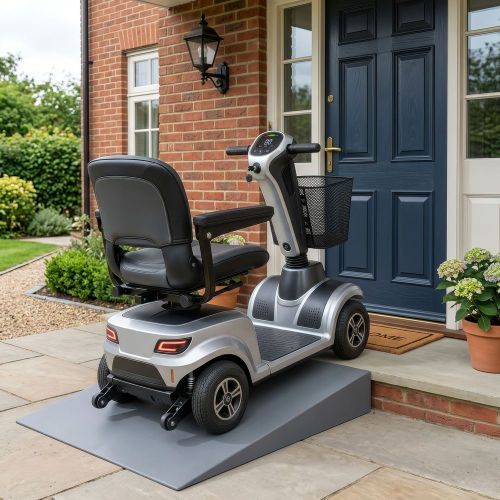
Threshold ramps are designed for relatively small changes in elevation, such as door thresholds, sliding door tracks, and small steps. Their compact size makes them convenient for permanent or temporary use where a longer wheelchair ramp would be unnecessary. Lightweight options, such as the 4" VersaRamp Threshold Ramp, are especially easy to position and move when you need a simple solution for a single doorway or entry point.
Folding Ramps
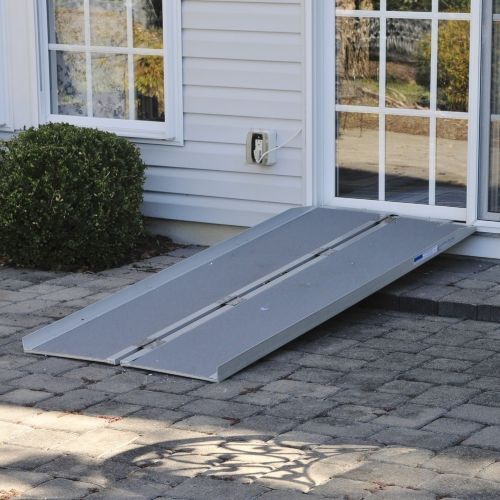
Folding ramps provide a full-width surface while allowing the ramp to collapse for transportation and storage. Single-fold and multi-fold designs are available in different lengths and weight capacities. These ramps can be particularly useful for users who want the stability and continuous surface of a full-width ramp but still need a portable solution. For added traction, the 4' Silver Spring Single-Fold Grit-Coat Ramp features a high-traction surface while folding in half for easier transport and storage.
Roll-up Ramps
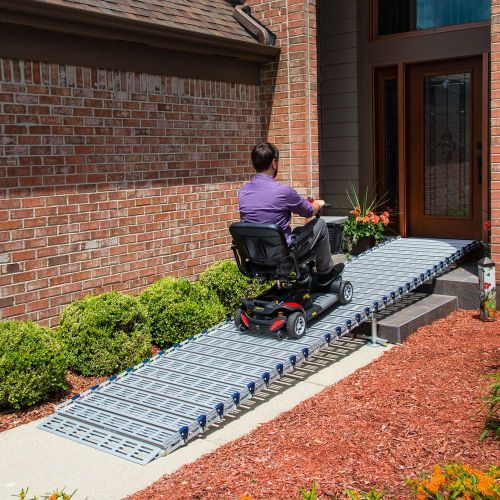
Roll-up ramps combine a full-width surface with compact storage. When the ramp is no longer needed, it can be rolled up and transported or stored more easily than many rigid ramp designs. The 8' Silver Spring Roll-Tek Modular Ramp Kit features a roll-up design for convenient transport and compact storage while providing a full-width path for mobility devices.
Telescoping Ramps
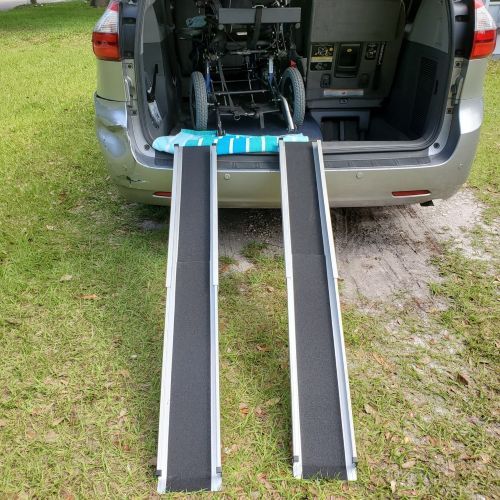
Telescoping ramps can extend and retract, allowing the user to adjust the ramp length within the model's specified range. Telescoping designs are available in both full-width and track-style configurations. The 4' to 7' Silver Spring Aluminum Telescoping Wheelchair Track Ramps offer adjustable length and a portable track-style design for convenient loading and storage.
Finding the Right Ramp for Your Needs
Choosing between a full-width portable wheelchair ramp and a track ramp ultimately comes down to finding the right balance of stability, portability, compatibility, and ease of use. Full-width ramps offer a continuous surface and broad compatibility, while track ramps can provide a lightweight, compact solution for compatible mobility devices.
Before making a purchase, measure the rise you need to overcome, determine the appropriate ramp length, check the weight capacity, and make sure the ramp is compatible with your wheelchair or mobility device. Taking these steps can help you find a portable ramp that works not only on paper, but also in your everyday routine.
If you need additional help determining which ramp is right for your situation, explore our guide on how to choose the correct wheelchair ramp length or browse our selection of portable wheelchair ramps at Discount Ramps.
The best portable wheelchair ramp isn't simply the one that fits the step. It's the one that fits the person, the mobility device, and the way the ramp will actually be used.
If you would like assistance choosing the right portable wheelchair ramp for your needs, please contact us or call us at 866-887-1001.