
How to Transport Your Wheelchair in a Car
Posted on: November 4th, 2024

We get it—transporting a wheelchair can truly feel like a logistical puzzle. The difficulty also changes depending on the size of the wheelchair and the size of the vehicle.
Standard wheelchairs with back support and footrests add to the size of the chair and add to the complexity of getting it into your car.
Large crossovers and SUVs most likely have trunk space to easily hold standard chairs, however they tend to be higher off the ground which can make heaving the chairs into the trunk a hassle. Sedans might be lower, but their trunk space is usually smaller and on a more horizontal plane, which poses challenges of its own.
Despite these factors, with the right knowledge, steps, and tools, getting a wheelchair in and out of a car might be easier than you think. Whether it’s your first time or you’re looking to simplify your routine, we’ll take you through each step with an emphasis on safety, efficiency, and a few helpful tricks along the way. Here’s how to do it.

Assess the Wheelchair, the Vehicle, and the Person Loading/Unloading
By looking critically at the three most important factors in the loading equation, you’ll be able to identify the tough parts about loading and unloading the chair and find ways to work around them. Some good questions to ask yourself include:
- Will the companion travelling with the person who needs the wheelchair be physically able to load and unload this wheelchair unaided into the trunk? If the companion cannot load and unload the wheelchair unaided, consider whether a loading ramp, or a hitch-mounted carrier with a ramp, would make the loading process less strenuous.
- Will this wheelchair model fit in the trunk? Most wheelchairs fold for transport, and the footrests are usually removeable.If the chair is already as compact as it can be and it won’t fit, consider a hitch-mounted carrier, or think about purchasing a more compact chair
- Is there anything I can adjust on the vehicle to get the wheelchair to fit?Most vehicles have rear seats that fold down for greater storage space. If there will be other passengers or the rear seats cannot be folded, then a hitch-mounted carrier or more compact chair will be your best option.
Choose the Right Transport Equipment
Once you understand what could make your transportation experience smoother and easier, selecting the right transport equipment can make all the difference.
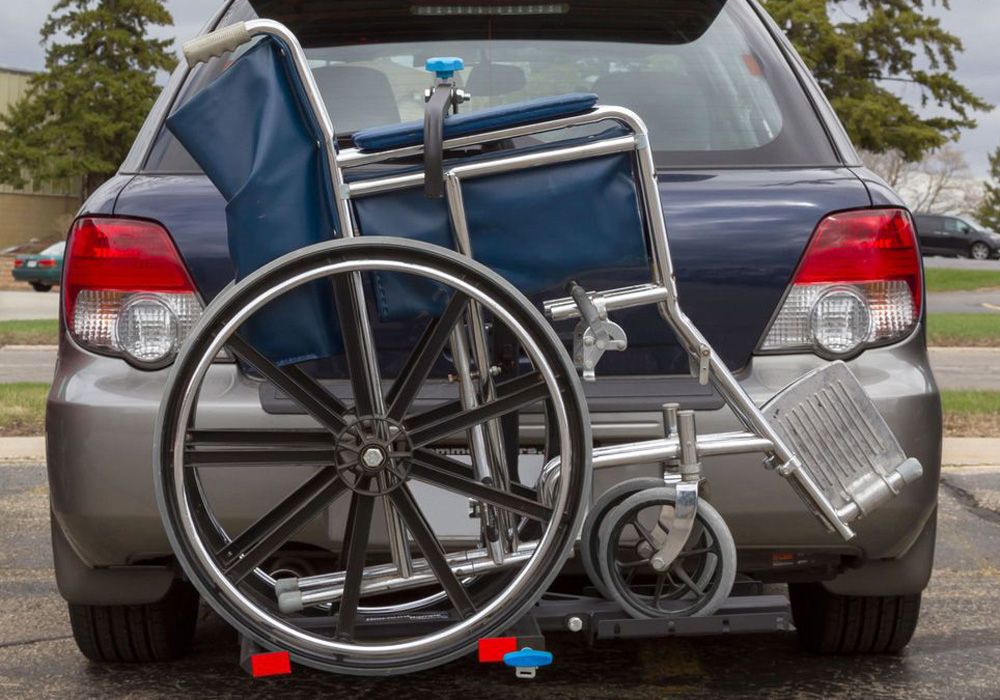
- Hitch-Mounted Carriers: These carriers install on your vehicle’s 2” hitch tube to provide a platform that leaves your interior cargo space intact. Cargo carriers with or without ramps could be an option if you choose to fold up your wheelchair and lie it flat, or if it has a compact folded footprint. Mobility carriers with built-in ramps are a pricier option, however they will allow you to roll the wheelchair up, and you may not have to fold it for transport. Carriers with ramps can also hold mobility scooters, lawncare equipment, and other wheeled items that you might need to transport in the future.
- Ball Mount Carriers: Designed solely for transporting manual wheelchairs, they attach to your vehicle’s hitch ball.
- Loading Ramps: If you’d prefer to load the wheelchair directly into the van, truck, or SUV, a vehicle-loading ramp provides a safe and smooth transition. We offer foldable ramps designed for easy, direct loading into the back of your vehicle, so you can simply roll the wheelchair in without lifting or straining. This option is excellent if you have more interior space or want to keep the wheelchair protected inside the vehicle.
Choosing the right ramp and setup ensures that loading will be quick, safe, and less physically demanding.
Prepare Your Vehicle
If you’re using a ramp to facilitate loading directly into the vehicle, position the ramp securely on the vehicle edge so it won’t slip.
If loading the wheelchair directly into the trunk, clear out any items that aren’t needed. If you’re concerned about scuff marks, or if the wheelchair wheels might not be clean, keep an old blanket or towel on hand to protect your vehicle’s interior surfaces.
If you’re using a hitch-mounted carrier, double-check the hitch connection and ensure the carrier sits level with the ground and doesn’t droop.

Load the Wheelchair
Now it’s time to load. Depending on your equipment, follow these steps:
- Using an External Carrier: If you’re using a hitch-mounted carrier, start by folding the wheelchair (if it’s a folding model) to reduce space. Carefully guide it up the ramp, centering it on the carrier. Keep a steady hand and use controlled movements to prevent any tipping.
- Using a Vehicle-Loading Ramp: For those loading directly into the car, roll the wheelchair up the ramp and position it securely inside. Align the wheelchair straight along the ramp for stability, especially with heavier power chairs. Many vehicle-loading ramps have non-slip surfaces to help keep wheels steady during loading.
Positioning the wheelchair properly reduces the risk of it shifting during transport, ensuring a stable, comfortable setup for the drive.

Secure the Wheelchair for Transport
Now that the wheelchair is in place, securing it is critical to prevent shifting or tipping.
- For Hitch-Mounted Carriers: Use any built-in securing straps that come with the carrier and consider additional tie-down straps for extra security. Attach the straps around the frame (not the wheels) and double-check that everything is snug.
- For In-Vehicle Transport: Inside the car, securing is equally important. Use heavy-duty straps to hold the wheelchair in place, anchoring it to points in the vehicle if available. Make sure the straps are tight enough to hold it securely but not so tight that they damage the chair’s structure.
A well-secured wheelchair will stay put, even if you encounter bumps or take sudden turns, keeping both the chair and your car protected.
Take Safety Precautions Before Hitting the Road
Before driving, check off this quick list to ensure a safe trip:
- Verify Visibility: If you’re using an external carrier, make sure brake lights, turn signals, and taillights remain visible. Add an extended mirror if the wheelchair partially obstructs your rear view, giving you a clearer picture of the road.
- Check Stability: Give the wheelchair a gentle shake to confirm it’s locked in place. Whether inside or on the carrier, a firm grip is crucial to prevent any shifting.
- Confirm Ramp Security: If your ramp stays in place during transit, confirm it’s latched and secure. For foldable ramps that you’ll remove, ensure they’re safely stored away.
Unloading the Wheelchair Safely
At your destination, unloading requires just as much care:
- Release straps carefully: Loosen each strap one at a time to keep the wheelchair balanced as you prepare to unload it.
- Guide the wheelchair down the ramp: For manual chairs, guide it slowly down the ramp, keeping control the entire way. For heavier power wheelchairs, consider having an extra set of hands if needed.
- Check wheelchair functionality: Once unloaded, ensure the wheelchair is on stable ground and give it a quick test to make sure everything is working as it should.
Hit the Road with Confidence
Transporting a wheelchair becomes easier with the right tools and a little practice. Whether you’re using a hitch-mounted carrier or loading the wheelchair directly into the vehicle, each step is about maximizing safety and efficiency. With the right setup, you’ll feel confident transporting a wheelchair anywhere, whether it’s a quick trip to the store or a cross-country adventure.
Need ramps, lifts, carriers, or anything else to support your mobility or that of a loved one? Discount Ramps has you covered. Have questions? Reach out to our helpful staff—we’re here 24/7 for you!